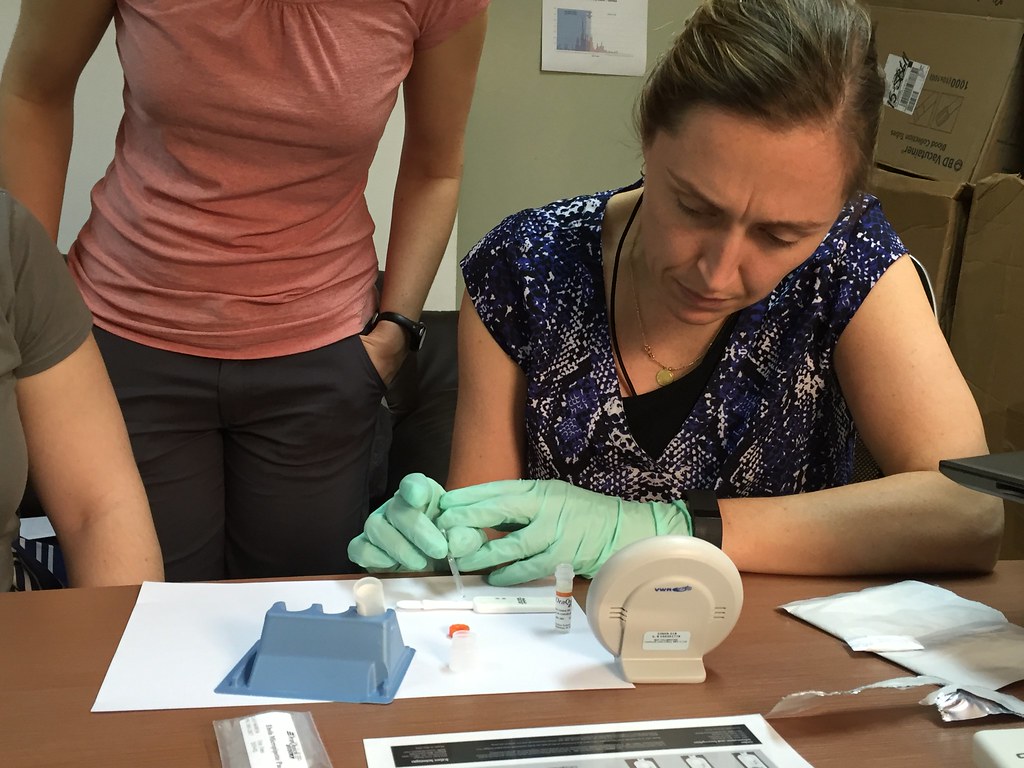
Rapid diagnostic tests have shown promising results in accuracy compared to traditional methods like ELISA. This article explores a systematic review and meta-analysis on their efficacy across major infectious diseases.
Introduction to Rapid Diagnostic Tests
Rapid diagnostic tests (RDTs) have emerged as a crucial tool in the detection of infectious diseases, offering results in a fraction of the time compared to traditional methods. These tests are designed to provide quick and reliable outcomes, making them essential in clinical settings where timely diagnosis is critical.
Recent studies have demonstrated the proven accuracy of RDTs when compared to the enzyme-linked immunosorbent assay (ELISA), a method typically regarded as the gold standard in diagnostics. The systematic review and meta-analysis highlighted the following key points:
- RDTs can yield results in under an hour, while ELISA often takes several hours to days.
- The sensitivity and specificity of RDTs are comparable to those of ELISA across various infectious diseases.
- RDTs facilitate immediate decision-making in patient care.
As such, RDTs represent a significant advancement in diagnostic technology.
Understanding ELISA Methodology
The Enzyme-Linked Immunosorbent Assay (ELISA) is a well-established laboratory technique used to detect and quantify proteins, antibodies, or hormones in various samples. This methodology is widely recognized for its sensitivity and specificity, making it a gold standard in diagnostic testing.
ELISA involves several key steps:
- Coating: A plate is coated with an antigen or antibody specific to the target molecule.
- Blocking: Non-specific binding sites are blocked to prevent false positives.
- Binding: Samples are added, allowing the target molecules to bind to the coated surface.
- Detection: A secondary antibody, linked to an enzyme, is introduced to amplify the signal.
While ELISA remains a trusted method, rapid diagnostic tests have emerged as a quicker alternative, offering comparable accuracy in many applications.
Comparative Accuracy of Diagnostic Tests
Recent research highlights the comparative accuracy of rapid diagnostic tests (RDTs) in relation to the traditional enzyme-linked immunosorbent assay (ELISA). In a systematic review and meta-analysis, findings indicate that RDTs demonstrate a remarkable sensitivity and specificity across various infectious diseases.
Key points from the analysis include:
- Overall Sensitivity: RDTs achieved an average sensitivity of 90%, closely rivaling that of ELISA.
- Specificity Rates: The specificity of rapid diagnostic tests was found to be around 92%, ensuring reliable negative results.
- Time Efficiency: RDTs provide results within minutes, while ELISA often requires hours to process.
- Field Applicability: Rapid diagnostic tests can be deployed in various settings, enhancing accessibility for patients.
This evidence underscores the growing importance of RDTs in modern diagnostics, particularly in resource-limited environments.
Implications for Infectious Disease Detection
The emergence of rapid diagnostic tests has significant implications for the detection of infectious diseases. These tests offer a quick and reliable alternative to traditional methods such as ELISA, which can be time-consuming. With the proven accuracy of rapid diagnostic tests, healthcare providers are now better equipped to make timely decisions regarding patient care.
Central to the effectiveness of these tests is their ability to deliver results in a matter of minutes, enabling faster diagnosis and treatment of illnesses. The systematic review and meta-analysis indicate that rapid diagnostic tests are not only efficient but also maintain a high level of sensitivity and specificity across various infectious diseases.
- Improved patient outcomes through prompt diagnosis
- Reduction in the spread of infectious diseases
- Enhanced public health response capabilities
As these technologies continue to evolve, their role in infectious disease detection will likely expand further.
Future Directions in Diagnostic Testing
The future of diagnostic testing is increasingly leaning towards the adoption of rapid diagnostic tests, driven by their proven accuracy and efficiency. Researchers are exploring innovative technologies to enhance the sensitivity and specificity of these tests, making them even more reliable in detecting infectious diseases.
Key areas of focus include:
- Integration of Artificial Intelligence: Utilizing AI to analyze test results and improve decision-making processes.
- Point-of-Care Testing: Developing tests that can be administered at home or in remote areas, ensuring wider accessibility.
- Multiplex Testing: Creating tests capable of detecting multiple pathogens simultaneously, streamlining diagnosis.
As advancements continue, the role of rapid diagnostic tests in public health will likely expand, offering timely and accurate results that can significantly impact disease management.
By CDC Global Health via Openverse

